

The Combine Harvester: How It Works and history
A combine harvester (or harvesters combine) is a large farming machine that cuts, threshes, and cleans grain crops in a single pass through a field.Over the years, combines have gone from being simple devices to becoming some of the most advanced machines on the farm.
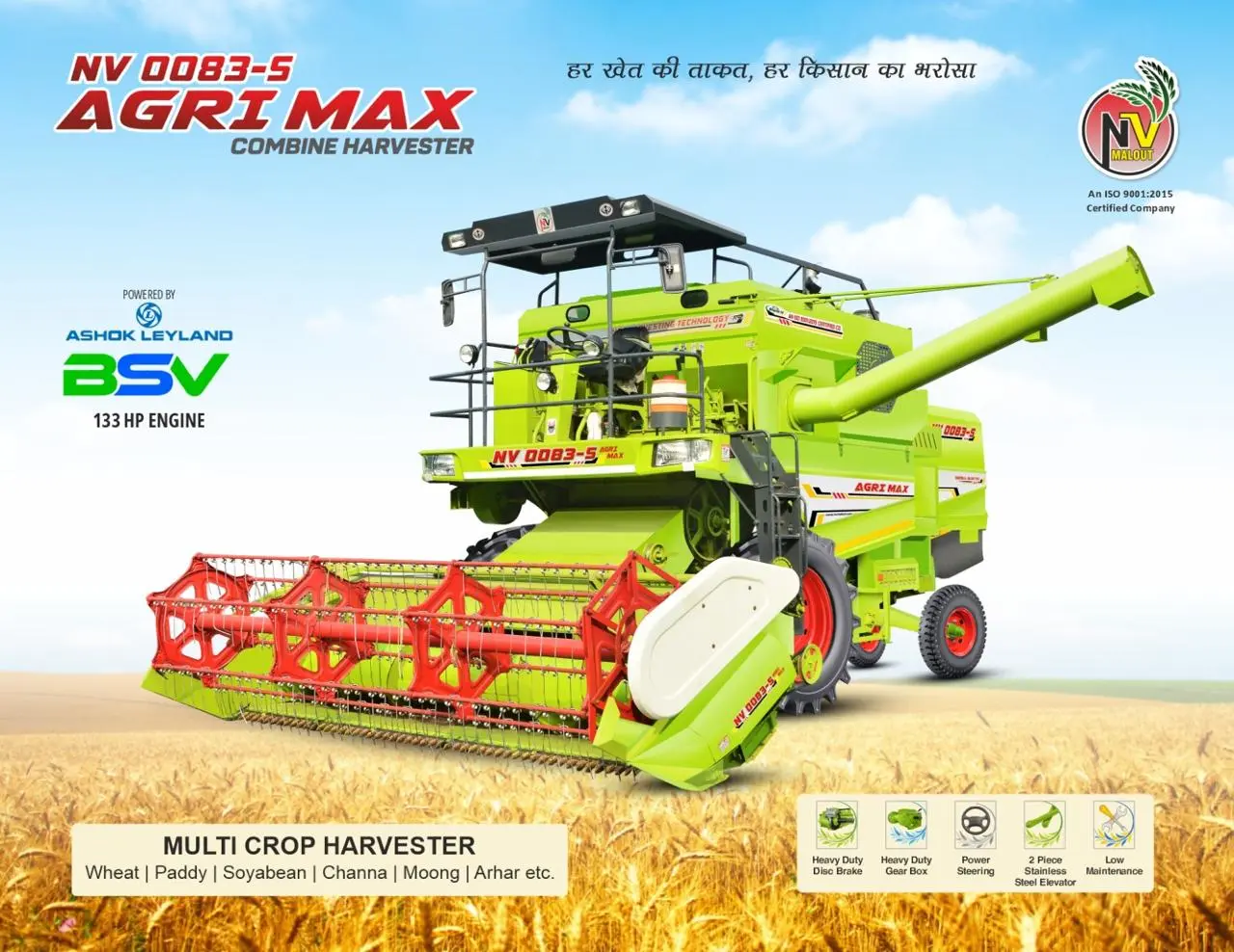
: How It Works and Its History ?
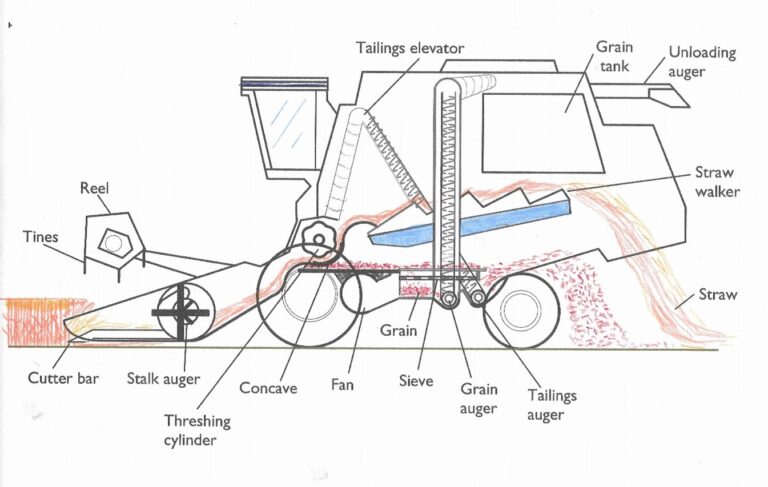
A combine moves down rows of crops using its front part called the reel—a big, six-sided metal piece that spins and scoops up the grain stalks. The design of the reel can change depending on what crop is being harvested. For example, a wheat reel pushes the stalks toward a sharp cutting bar that slices them just below the grain heads, while a corn on the cob reel pulls the ears from the stalks. After the wheat stalks are grabbed, they are pushed up against a cutter bar that looks a lot like a comb. The “teeth” of this comb catch the stalks, and a knife slices them near the ground. These cut stalks are moved by a spinning metal cylinder, called a stalk auger, onto a moving elevator belt that carries them up into the middle of the combine. Inside the combine, the stalks reach the threshing cylinder—a large spinning roller with bumps on it. This cylinder spins quickly over a special curved tray with slits (the concave). The beating and spinning action knock the kernels of grain free from the heads of the stalks. The leftover stalks move onto a series of straw walkers: large, square platforms that shake and move the straw toward the back of the combine. The shaking helps drop the straw so it can be left on the ground or packed into bales. Meanwhile, the small kernels of grain fall through the slits in the concave and land in a tray called the grain pan. The pan and a set of vibrating sieves separate the kernels from pieces of chaff (the lightweight shells and bits around the seeds). A strong fan blows air over the sieves, which sends the light chaff out the back of the combine. Any grain heads that didn’t get threshed are sent back to the threshing cylinder for another try. The clean kernels fall into a grain auger, which moves them up into a large storage tank on the combine. When the tank is full, an unloading auger helps move the grain out to a waiting truck.
Key Featurers
- Wheat
- Paddy
- Soyabean
- chana
- Moong Dal
- Arhar
History of the Combine Harvester
Before combines, harvesting meant cutting, gathering, threshing and winnowing grain as separate jobs, often by hand and with large crews.
- 1830s: Hiram Moore and John Hascall built and patented an early combine in Michigan. It was horse-drawn and very heavy.
- 1880s: Large horse- and mule-drawn combines worked the wheat fields of California.
- 1900s–1920s: Steam and then petrol engines replaced animal power.
- 1930s: Self-propelled combines appeared, including models from Claas in Europe and Massey-Harris in North America.
- 1960s–70s: Combines spread across India, especially Punjab and Haryana, during the Green Revolution.
- Today: Modern machines use GPS guidance, yield mapping and sensors to cut losses and save time.
Modern Combines
Today, combines are incredibly complicated. While a regular car has about 6,000 parts, a combine has more than 17,000! This makes them very expensive—a single combine can cost up to Rs 32,00000 to 3500000. Today, most of the machines that work their way through India’s harvest of grain, oilseeds and pulses are built in Moga,Punjab.
Extreme Time & Cost Efficiency:
Tasks that once took manual laborers weeks to complete can now be finished in mere hours by a single operator. This substantially drops overall overhead costs.
Reduced Weather Risk:
Leaving cut crops out in the field for days to dry manually exposes them to ruin from sudden rainstorms.
Precision Agriculture Technology:
A combine harvester is a versatile and essential agricultural machine designed to streamline the farming process by merging three separate operations—reaping (cutting), threshing (separating the grain from the stalk), and winnowing (cleaning the grain).
Contact Us
Utilize our tools to develop your concepts and bring your vision to life. Once complete, effortlessly share your creations.
Malout-15217, Punjab India